

AI Gen Process/Software: Human, ChatGPT, Perchance.org, Producer.ai – DAW: Audacity 3.7.7, OS: Linux (Ubuntu 25.10)
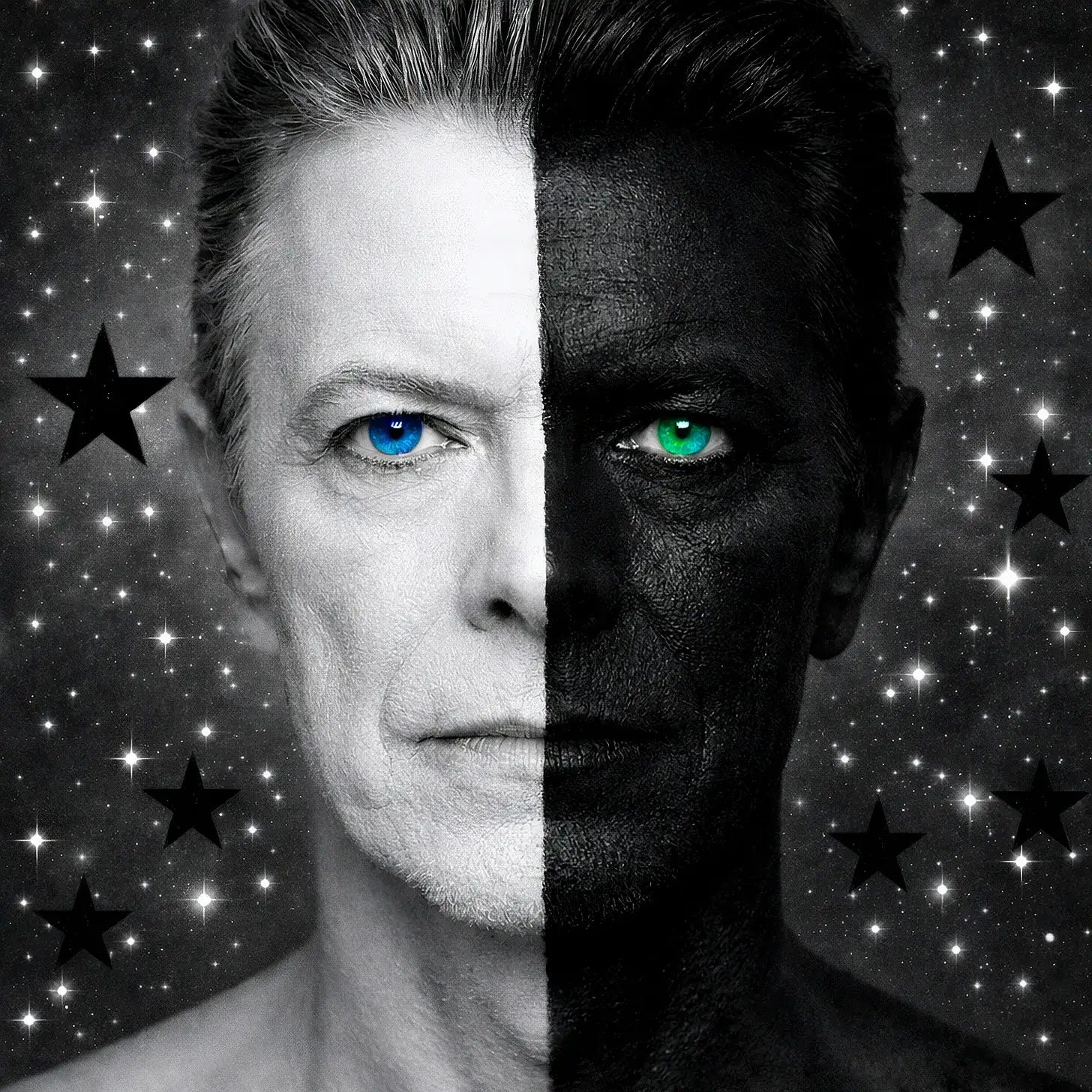
Part Nine, the last of the Bowie Series
Blackstarman – Full Album (54:23)
Stream/Download Free MP3
I want to begin where David Bowie ended. Not with the myth, not with the masks, but with the man.
Blackstar was not a comeback record. It wasn’t a late flourish or a clever disappearing act. It was a return to the studio by someone who knew, privately and precisely, that time had narrowed. After twelve years away, years marked by illness, withdrawal, and silence, Bowie came back not to reclaim relevance, but to complete a sentence he had been writing his entire life.
What he left us with was not Ziggy, not the Thin White Duke, not the alien messiah or the shape-shifting oracle. Blackstar is David Bowie, the mortal man, standing fully inside his own impermanence. And he processes his raw fear, at times raging, by transforming it all, one last time, into art. Death does not have a hold on him; he has a death-grip on it and as always, wants us to listen, to watch his final piece. He takes the raw fact of dying and turns it into curiosity, into mischief, into love.
These songs feel like messages smuggled out of the room while the door was closing. They are elliptical, haunted, generous. Bowie isn’t saying goodbye so much as he’s teaching us how to look at the edge without blinking. He knew exactly what he was doing. He released the album two days before his death not as theater, but as timing, an complete alignment of life and work so exact that it still feels unreal, as the artist, the human intended.
Blackstar is not an epitaph. It’s a final and infinite transmission.
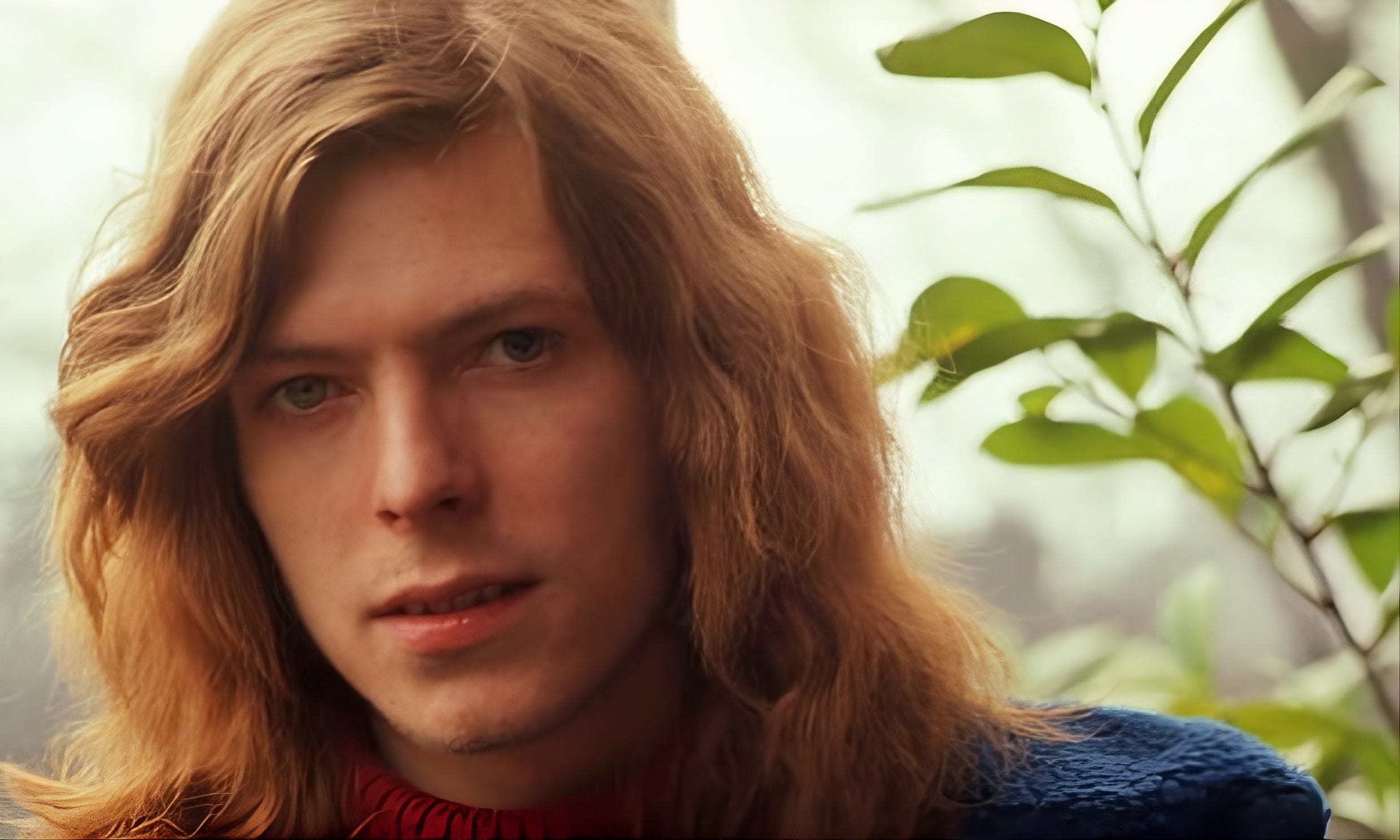
When I adapted the album, I didn’t want to improve it (impossible!), explain it, or modernize it. That would miss the point entirely. I renamed it Blackstarman as an act of homage, reaching back to one of Bowie’s earliest states of becoming, before the armor, before the mythology set in our psyches. I imagined this ending as a beginning. What if the man who made Blackstar in 2015 could step back into the late 1960s and rewrite it there, not as prophecy, but as a potential rebirth?
So this adaptation re-frames Bowie’s final notes through a different temporal lens. Same bones, same vocals, same gravity, same emotional truth, but filtered through a psychedelic folk palette, not more uplifting but more classic Bowie, intimate, analog, as if these songs were being discovered rather than delivered. Acoustic instruments. Human air. The sense of a young artist circling big questions long before fame taught him how to disguise them.
The final song expands into five parts, not to inflate it, but to dwell within it. Each movement is a celebration of a man who truly did give everything away. And at the very end, I let Bowie speak for himself, directly in an old quote. No character. No curtain. Just a glimpse of the person turning the dials, turning us on, while we were too busy watching the wizard to notice the human.
That magic never belonged only to him. It was always meant to pass through us, to carry us to the edge of what we know, and just a little beyond it.
This is Blackstarman.
An ending imagined as a return.
A thank-you, offered to a human being who taught us how to become superhuman by never stopping our own transformations and like him, courageous and bold ascensions into the unknown and unknowable.
“I have no idea where I’m going from here, but I promise I won’t bore you.”
- David Bowie, 1997
I don't know what the original Blackstar sounded like, but this sounds superb! Like the way Bowie himself would have orchestrated and produced it, back in his prime. I wish psychedelic folk were still a living genre.